
At Corofy, one of the established oil and gas chemical suppliers in Dubai, we provide high-performance chemical solutions engineered for the demanding needs of the oil and gas industry. As a supplier of oilfield chemicals UAE operators depend on, we cover everything from upstream drilling additives and production chemicals to downstream process aids and water treatment solutions, with our portfolio designed to enhance efficiency, safety, and compliance. With a deep understanding of industry challenges and a focus on innovation, Corofy operates as a petroleum industry chemical supplier Dubai energy players partner with to deliver reliable formulations, blending services, and technical expertise that drive operational excellence.



Our Oil and Gas Chemicals Range
Drilling Fluids & Additives
COROL PAC LV
PAC LV (Polyanionic Cellulose Low Viscosity) is a highly effective fluid loss control agent used in the oil and gas industry to manage the loss of drilling fluid into porous formations. PAC LV is specifically designed to minimize fluid loss while maintaining the viscosity and rheological properties of drilling fluids. It is widely used in water-based drilling muds, especially in formations with high permeability or in environmentally sensitive areas.
COROL PAC HV
COROL PAC HV (Polyanionic Cellulose High Viscosity) is a premium fluid loss control agent used in the oil and gas industry to prevent excessive fluid loss into porous formations during drilling operations. This high-viscosity version of Polyanionic Cellulose is specifically formulated to control fluid loss while enhancing the rheological properties and stability of drilling muds.
COROL CMC LV
COROL CMC LV (Carboxymethyl Cellulose Low Viscosity) is an advanced fluid loss control agent used in the oil and gas industry to effectively manage fluid loss during drilling operations. This low-viscosity polymer is designed to reduce the filtration rate while maintaining a balanced viscosity in drilling fluids, particularly in formations with moderate permeability.
COROL Starch HT
Starch is a natural fluid loss control agent widely used in the oil and gas industry, particularly in water-based drilling fluids. As a cost-effective and eco-friendly solution, starch helps to reduce fluid loss and prevent excessive filtration into porous formations during drilling operations. When added to drilling muds, starch helps to form a stable filter cake on the wellbore surface, minimizing the loss of drilling fluids into the formation and enhancing wellbore stability.
Walnut (F/M/C)
Nut Plug is a specialized Lost Circulation Material (LCM) designed to effectively seal off lost circulation zones during drilling operations. Made from crushed nut shells, typically walnut or almond, Nut Plug is widely used in the oil and gas industry to bridge large fractures and voids in the formation, preventing the loss of drilling fluid and ensuring continuous circulation.
CORO DEFOAM AB90 (Alcohol-Based Defoamer)
Alcohol-Based Defoamers are highly effective foam control agents designed to quickly and efficiently break down and prevent foam formation in drilling fluids, industrial processes, and chemical formulations. These deactivating agents are specifically formulated to reduce excessive foaming, which can interfere with drilling performance, hinder equipment efficiency, and complicate the handling of fluids.
CORO DEFOAM SB10 (Silicone-Based Defoamer)
Silicone-Based Defoamers are highly efficient foam control agents designed to eliminate and prevent foam formation in a wide range of industrial applications, including oil and gas drilling, chemical manufacturing, and wastewater treatment. These silicone-based formulations provide rapid foam suppression and long-lasting defoaming action, making them ideal for challenging operations where foam buildup can disrupt performance and cause operational delays.
Production & Completion Chemicals
Calcium Chloride Anhydrous 94% Granular
Calcium Chloride is a versatile production chemical used primarily in oil and gas operations for a variety of applications, including well stimulation, completion fluids, and fluid control. Calcium chloride is highly soluble in water and is commonly used to increase the density of completion fluids, stabilize wellbore conditions, and adjust the water activity of the brine phase in oil-based muds.
KCl 98% (Potassium Chloride)
Potassium Chloride (KCl) is a highly effective production chemical commonly used in oil and gas operations, particularly for drilling and completion fluids. Potassium chloride plays a crucial role in maintaining wellbore stability, controlling fluid loss, and minimizing formation damage during drilling activities. It is especially useful in formations with a high risk of clay swelling and shale instability, as it helps to prevent water absorption and expansion of sensitive formations.
Calcium Bromide Solution 52%
Calcium Bromide (CaBr₂) is a highly effective production chemical used in the oil and gas industry, particularly for high-density completion fluids and well control applications. Due to its high solubility and ability to increase fluid density, calcium bromide is commonly utilized in completion fluids for deepwater, high-pressure, and high-temperature well environments. It provides essential well control by maintaining pressure and preventing formation damage during drilling and completion operations.
Solvent Naphtha 150
Solvent Naphtha 150 is a versatile hydrocarbon solvent widely used in various industrial applications, particularly in the oil and gas, coatings, chemical, and cleaning industries. With its refined composition, solvent naphtha 150 is ideal for diluting, cleaning, and degreasing equipment and surfaces, as well as serving as a solvent in formulation processes.
Monoethylene Glycol (MEG)
Monoethylene Glycol (MEG) is a versatile organic compound used extensively in the oil and gas, automotive, chemical, and manufacturing industries. MEG is primarily known for its antifreeze and coolant properties, but it is also a key component in various industrial processes, including as a solvent, humectant, and stabilizer.
Triethylene Glycol (TEG)
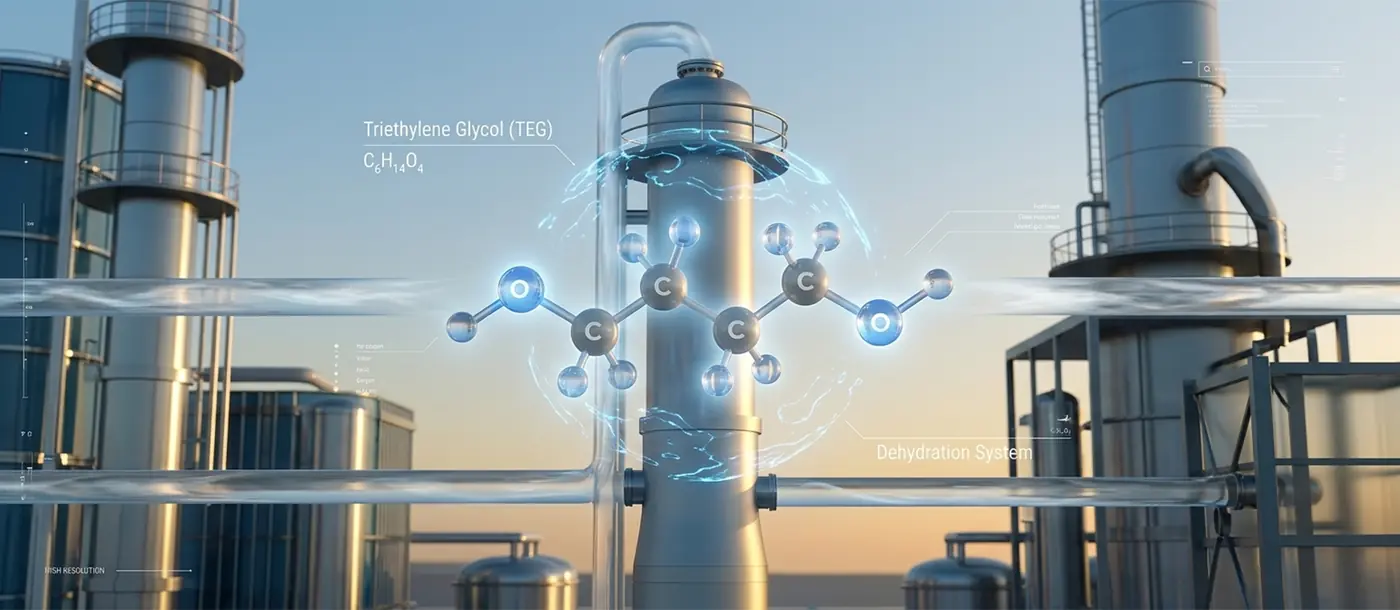
Triethylene Glycol (TEG) is a polyethylene glycol compound that is widely used in the oil and gas industry, as well as in various industrial applications. TEG is primarily known for its hydrate inhibition properties, where it prevents the formation of gas hydrates during natural gas processing and transportation. Its ability to absorb water and reduce the freezing point of fluids makes it essential in gas dehydration and gas sweetening processes.
COROL SI300 (Polyamine Shale Inhibitor)
Polyamine is an effective shale inhibitor used in oil and gas drilling operations to enhance wellbore stability. As a drilling fluid additive, polyamine prevents the swelling, dispersion, and disintegration of sensitive shale formations, particularly in water-based drilling fluids. It works by forming a protective layer around the shale particles, minimizing the interaction between water and clay minerals, thus stabilizing the wellbore during drilling activities.
Cloud Point Glycol (Drilling Glycol)
Cloud Point Glycol is a polyalkylene glycol used in water-based drilling fluids as a shale inhibitor. Above its cloud point the glycol comes out of solution and helps seal shale pores, reducing water invasion into reactive shales and improving wellbore stability, while also adding lubricity to the mud system.
Corrosion Control
Morpholine
Morpholine is a heterocyclic amine with a six-membered ring structure that contains both an oxygen and a nitrogen atom. This versatile compound is widely used as a solvent, corrosion inhibitor, chemical intermediate, and pH adjuster in various industrial applications, especially in the chemical, pharmaceutical, and oil & gas industries.
Midstream & Refinery Chemicals
N-Methylaniline (NMA)
N-Methylaniline (NMA) is a versatile aromatic amine that plays a critical role as an industrial solvent and chemical intermediate in various manufacturing processes. It is commonly used in the synthesis of dyes, pharmaceuticals, and agrochemicals, where its unique chemical properties facilitate effective reactions and formulations. NMA is produced through the methylation of aniline, resulting in a compound with a methyl group attached to the nitrogen atom, making it a valuable building block in chemical manufacturing.
H2S Scavenger (Triazine-Based)
H2S Scavenger is a highly effective chemical solution designed to remove hydrogen sulfide (H₂S) from gas and liquid hydrocarbon streams in industries such as oil & gas production, refining, and natural gas processing. Hydrogen sulfide is a toxic, corrosive gas with a rotten egg smell, commonly found in sour gas or crude oil. The presence of H₂S poses significant challenges due to its toxicity, corrosive properties, and its potential to cause environmental contamination and regulatory compliance issues.
Monoethanolamine (MEA)
Monoethanolamine is a versatile chemical widely used across industrial applications, including the paint and oil & gas sectors. In the paint industry, MEA acts as a stabilizing and neutralizing agent, helping maintain pH balance and improving the performance of water-based formulations. In oil and gas drilling operations, Monoethanol Amine is used on the drilling side to manage acidic components and support efficient, safe processing conditions. Its multifunctional properties make MEA a reliable chemical solution for demanding industrial environments.